The Short Answer
By late November, Pittsburgh is dark before 5 p.m., and plenty of rooms — interior bathrooms, hallways, kitchens with one small window — barely see daylight at all. A modern skylight fixes that by bringing light in from the one direction no neighbor, hill, or tree can block: straight down. Today’s VELUX skylights are a long way from the leaky plastic bubbles of the 1980s — sealed glass, proper flashing, venting and solar models, and blinds. And if your existing skylight fogs, drips, or has a yellowed dome, it is telling you it is at the end of its life.
Pittsburgh Winters Are Dark. Your House Does Not Have to Be.
Western Pennsylvania is one of the cloudiest regions in the country, and from November through February we get the double hit: heavy cloud cover and the shortest days of the year. Walk through a typical Pittsburgh home at 3 p.m. in December and you will find the same rooms in every house — the interior bathroom with no window at all, the hallway, the kitchen that faces a hillside or a neighbor’s wall, the finished attic room that needs a lamp on at noon.
Homeowners try to fix it with bigger light fixtures, and it helps the brightness but not the feel. Daylight from above is different: it is the light our eyes are built for, it moves through the room during the day, and it comes from the roof — the one part of the house with an unobstructed view of the sky. That is the entire case for a skylight, and late November, when the gloom is impossible to ignore, is when most people finally make the call.
What a Modern Skylight Actually Does
If your mental image of a skylight is a yellowed acrylic dome that drips, update it. EAS Roofing installs VELUX skylights, and the current lineup is built for exactly our winters:
- Real light, all day. A skylight delivers up to three times the light of a vertical window the same size, because it faces the sky instead of the yard.
- Fixed or venting. Fixed models are pure light. Venting models open to let warm, moist air escape — which makes them ideal over kitchens and bathrooms, the two rooms that generate the most moisture. Solar-powered venting models need no wiring and close themselves when it rains, thanks to a built-in rain sensor.
- Blinds that work for you. Solar blinds — light-filtering or blackout — tame summer glare and heat and add insulation value on a January night, all from a remote.
- Glass, not plastic. Modern units use laminated, Low-E coated glass: quieter in rain, far better insulated than an old dome, and it does not yellow or go brittle.
- A real warranty. VELUX backs its deck-mounted skylights installed with their flashing kits with a 10-year “No Leak” warranty — the manufacturer is that confident in the flashing system doing its job.
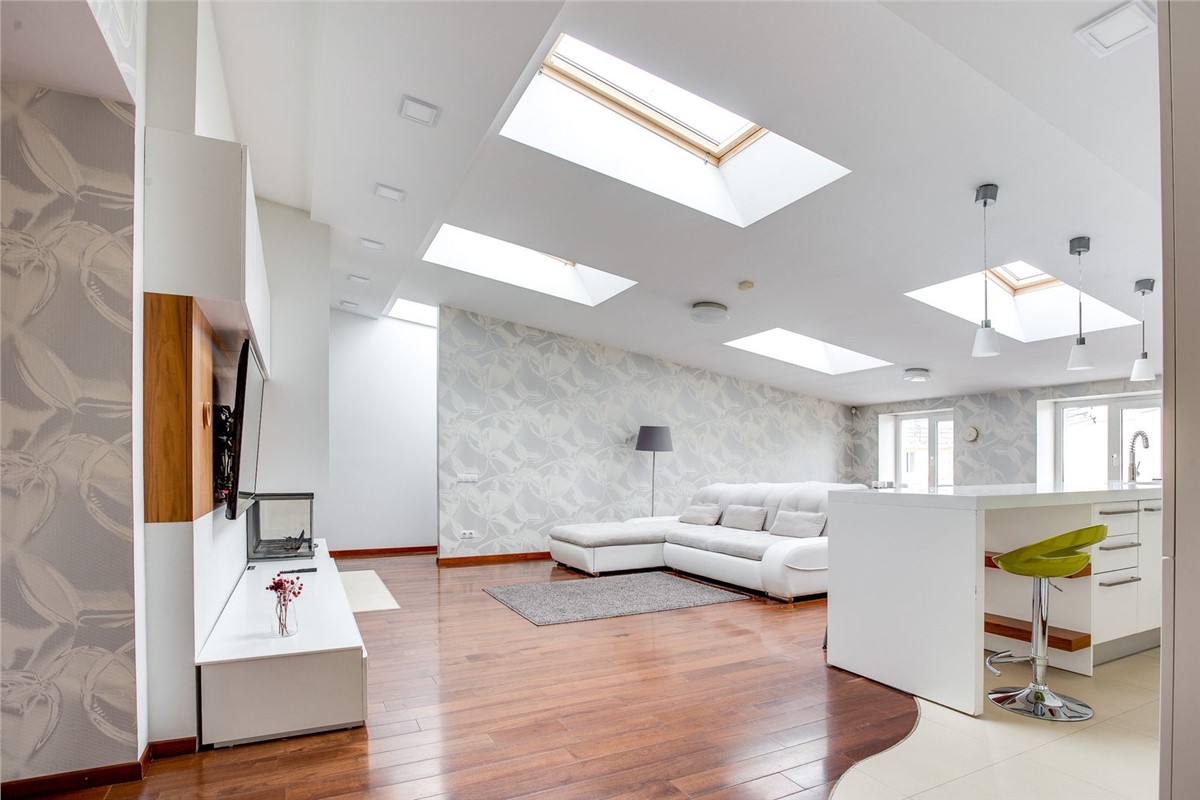
This is what a skylight does that no lamp can: a room lit from above, all day, even in the middle of winter.
Signs an Old Skylight Needs Replacing
Skylights live on the roof, so they age on the roof’s schedule. Most quality units last 20 to 25 years. The signs that one is finished are hard to miss once you know them:
- Fogging or moisture between the panes — the seal has failed and the insulating gas is gone.
- Drips after rain, or water stains on the shaft walls or the ceiling around it.
- A dome or pane that has yellowed, clouded, or crazed with fine cracks — old acrylic does all three.
- Cracked or brittle seals and flashing that has lifted or separated from the unit.
- A noticeable draft or a cold spot under the skylight in winter — the unit is leaking heat as well as light.
Any one of these on a skylight that is old enough to vote is a replacement conversation, not a caulking conversation. Sealant buys a season at best; it does not rebuild a failed unit.
Is It a Skylight Leak — or Something Else?
Here is the twist that surprises people: in a Pittsburgh winter, most “leaking” skylights are not leaking at all. They are collecting condensation. Warm, moist indoor air — showers, cooking, a humidifier working overtime — rises to the coldest surface in the room, which is the skylight glass, and condenses there. The water runs down the shaft and drips, looking exactly like a roof leak.
The tells: condensation shows up on cold mornings with no rain or snowmelt, it wipes dry and comes back with the next shower, and it gets better if you run the bathroom fan longer and keep indoor humidity in check. A true leak follows the weather — it drips during or after rain and heavy snowmelt, and it usually leaves a stain that grows.
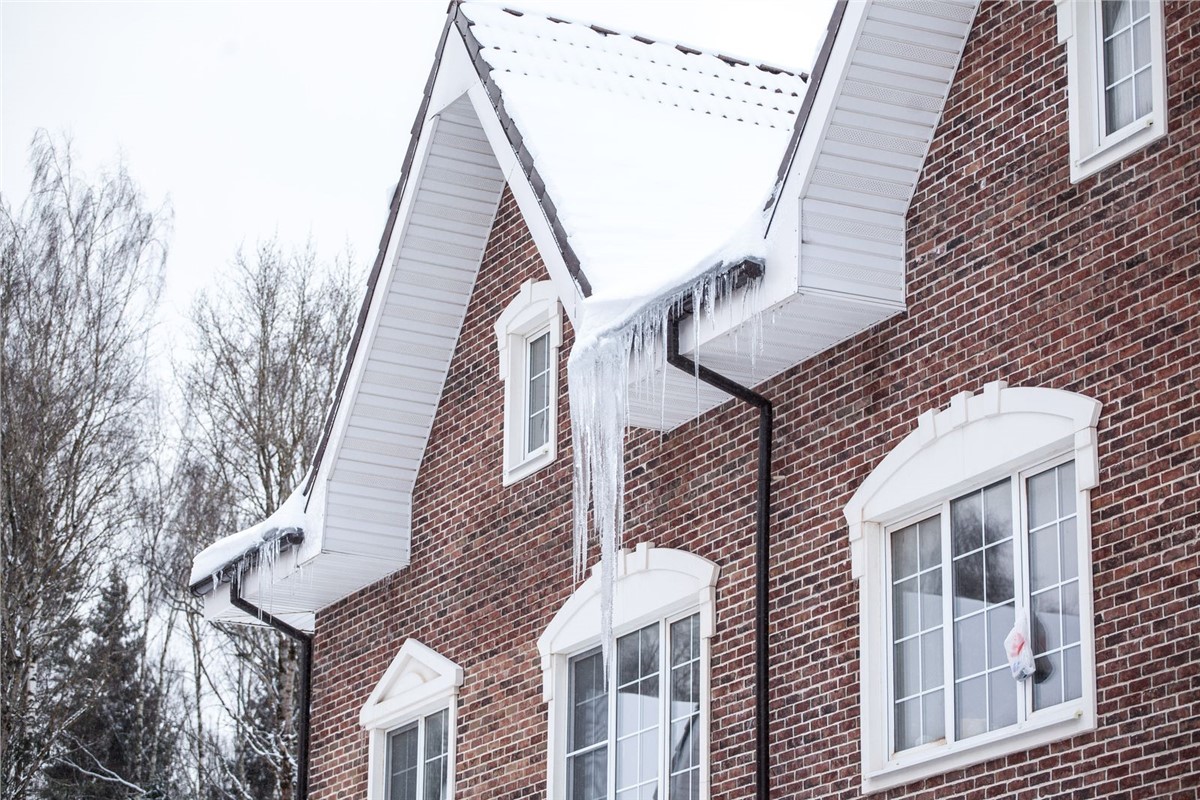
Two more impostors to rule out: flashing that has failed around the unit (a real roofing repair), and an ice dam backing water up to the skylight curb during a deep freeze — the subject of our November 13 post. The honest answer is that someone has to actually look, from the roof and from inside, before anyone quotes a fix. We would rather tell you your skylight is fine and your fan timer is the problem.
Replace It With the Roof — or On Its Own?
The best time to replace a skylight is during a roof replacement, and it is not close. The roof is already open, the new flashing kit gets woven into brand-new shingles exactly as the manufacturer intends, the labor is already on site, and you will never pay to disturb an aging roof to swap a skylight later. If a skylight will hit 20 years during the life of your new roof, replacing both together is the smart money — it is why we raise the question on every replacement estimate.
A standalone swap still makes sense when the roof is young and the skylight is failing. A like-for-size replacement — a new deck-mounted unit in the same opening — is a clean, contained job. Adding a brand-new skylight where none exists is a bigger project, since it usually means framing a light shaft through the attic, and that one is best planned deliberately rather than squeezed in. Either way, none of it has to wait for spring: skylight work is part of roofing, and roofing runs all winter here.
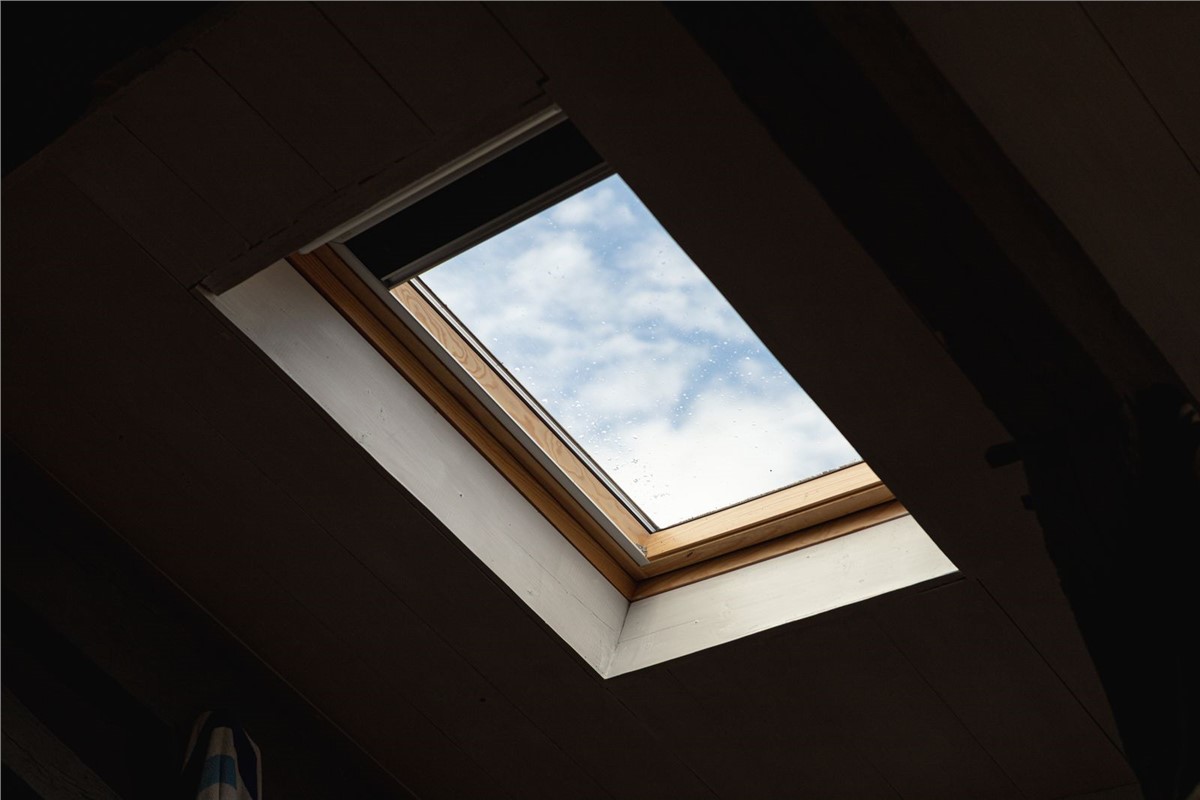
Even on a gray Pittsburgh day, a skylight pulls in more usable light than the room had — that is the whole point.
The Energy Angle, Honestly
People worry a skylight is a hole in their insulation. An old acrylic dome honestly was — thin plastic, tired seals, heat pouring out all winter. A modern glass unit is not: Low-E coatings and insulated glass keep the heat in, blinds add another layer on cold nights, and the daylight it brings means lights stay off in that room for most of the day. Venting models pull double duty in summer, letting the hottest air in the house escape at the ceiling instead of fighting the air conditioner. Net effect for most homes: a new skylight is roughly energy-neutral on paper, and a genuine quality-of-life upgrade every single day.
Frequently Asked Questions
Will a new skylight leak?
A quality modern skylight, installed with its matched flashing kit, is one of the most reliable parts of a roof — reliable enough that VELUX puts a 10-year No Leak warranty behind that installation method. The skylights with bad reputations are old domes, failed seals, and units whose flashing was never right. Most “skylight leaks” we inspect turn out to be condensation or flashing, not the unit itself.
Can a skylight be replaced in winter?
Yes. A like-for-size replacement is a contained job that roofers do all winter in Pittsburgh; the opening is never left exposed overnight. A brand-new skylight that needs a framed light shaft is a bigger project and is worth planning properly — often alongside a roof replacement.
How long do skylights last?
Plan on 20 to 25 years for a quality glass skylight. That is why the skylight’s age matters during a roof replacement: a new roof will outlive a 20-year-old skylight, so replacing them together avoids opening a finished roof later.
Fixed or venting — which do I want?
Venting for bathrooms and kitchens, where the job includes getting moisture out; solar venting models need no electrician and close themselves when it rains. Fixed is the right call for pure light in living rooms, hallways, and stairwells — and it costs less. Many homes end up with one of each.
What does a skylight replacement cost?
It depends on the size, fixed versus venting, whether it is a same-size swap or a new cut-in with a framed shaft, and whether blinds are included — the unit itself is only part of the number, alongside the flashing kit and labor. Anyone quoting a firm price without looking at your roof and your room is guessing. An itemized quote after a quick inspection takes the guesswork out.
The Bottom Line
A skylight is the rare home upgrade you notice every day — and late November in Pittsburgh is when the difference between a gloomy room and a daylit one is biggest. If you have an old skylight that fogs, drips, or has gone yellow, it is asking to be replaced, ideally alongside your next roof. If you have a dark room and no skylight, the fix may be sitting right above your head.
EAS Roofing is a family-run roofing company based in Glenshaw, serving the Pittsburgh area. We install VELUX skylights with their matched flashing systems — and if your “leak” turns out to be condensation, we will tell you that instead of selling you a unit.
Thinking about a skylight, or have one that is leaking? Call 412-781-ROOF (412-781-7663) for an honest look, or request a quote at ThePittsburghRoofer.com.
Subscribe to EAS Roofing's Blog



Comments