The Short Answer
An ice dam is a ridge of ice that builds up along the edge of your roof and traps meltwater behind it — and it is caused by heat escaping from your house into the attic, not by your gutters and not by the weather alone. The real prevention is keeping the roof surface cold with proper attic insulation and ventilation, backed up by ice-and-water shield at the eaves for the water that gets in anyway. If your home grows long rows of icicles every winter, your roof is telling you it loses heat. Here is how the whole thing works, and what actually fixes it.
What an Ice Dam Actually Is
Start with a snowy roof and a warm attic. Heat from your living space rises into the attic — through thin insulation, around recessed lights, up plumbing and wiring chases, and through the attic hatch. That heat warms the underside of the roof deck, and the snow sitting on the upper part of the roof starts to melt, even on a day that never gets above freezing.
The meltwater runs down the roof until it reaches the eave — the part of the roof that hangs out past your exterior wall. Out there, there is no warm house underneath, so the roof surface is at the outside temperature, and the water refreezes. Do that for a few freeze-thaw cycles and a ridge of ice forms at the edge: the dam. More meltwater arrives, pools behind the dam, and sits there.
That pool is the problem. Shingles are built to shed water that is flowing downhill, not to hold back standing water. Pooled water works its way under the shingles and through nail holes and seams, and from there into the attic, the insulation, and the walls and ceilings below. The leak often shows up several feet inside the house from where the dam sits, which is why ice dam leaks are so often blamed on the wrong thing.
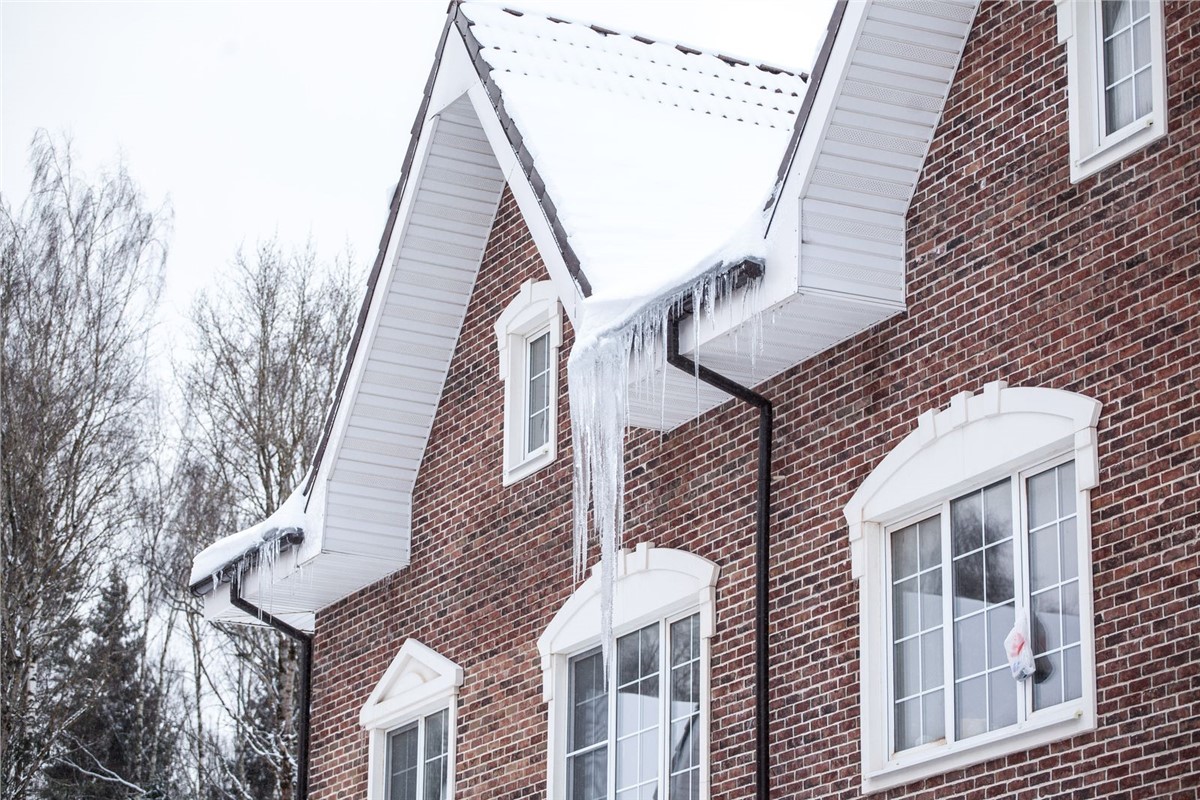
Icicles this size are the visible part of an ice dam — the ridge of ice at the eave is holding meltwater on the roof behind it.
Why Pittsburgh Homes Get Them
Western Pennsylvania is ice dam country for three reasons. First is our weather pattern: snow, then a day in the thirties that starts the melt, then a hard freeze at night. That cycle can repeat for weeks in January and February, and every pass adds to the dam. Second is our housing stock — plenty of older Pittsburgh homes were built with thin attic insulation and venting that was an afterthought, and many have additions, porch roofs, and intersecting roof lines where snow collects and melts unevenly.
Third is roof geometry. Valleys, low-slope sections over porches and additions, cathedral ceilings, and rooms tucked under the roof all create warm spots and cold edges — exactly the combination a dam needs. Two houses on the same street can have completely different ice dam problems, because the dam is really about your house and your attic, not the storm.
The Three Real Fixes
Every genuine ice dam fix works on the same principle: keep the roof surface cold and even, so snow melts the same way everywhere — slowly, from the sun and the weather, not from your furnace. There are three pieces to it, and they work as a complete roofing system.
1. Attic insulation — and sealing the leaks into the attic. Insulation slows the heat, but the bigger offenders are often the bypasses: gaps around pipes, wires, chimneys, recessed lights, and the attic hatch that let warm air pour straight into the attic. Sealing those gaps and insulating to around R-49, the level recommended for our climate zone, is the single most effective ice dam prevention there is. It also lowers your heating bill all winter, dam or no dam.
2. Ventilation. A properly vented attic flushes out any heat that does get in. Cool air enters at the soffits and exits at the ridge, keeping the roof deck close to the outside temperature. The catch is that soffit vents only work if they are open — insulation stuffed into the eaves blocks them, which is why baffles matter. Balanced intake and exhaust is the goal; a hot attic in winter is a warning sign, not a comfort feature.
3. Ice-and-water shield at the eaves. This is the safety net, installed when the roof is replaced. Ice-and-water shield is a self-sealing membrane (we install CertainTeed WinterGuard as part of our roofing systems) that goes under the shingles at the eaves and in valleys and seals around every nail. If meltwater ever does back up, it meets a waterproof barrier instead of bare deck and shingle seams. Building code in our area requires it to extend up the roof past the exterior wall line — the zone where dams form. It does not stop dams from forming, but it stops them from leaking.
Warning Signs Your House Is Set Up for Ice Dams
You can usually spot an ice-dam-prone house from the sidewalk in January:
Long, thick rows of icicles along one or more eaves, winter after winter.
Uneven snow melt — the upper roof is bare while snow and ice hang on at the edges. That pattern means heat is escaping unevenly.
Icicles on one section of the house but not the rest, often over an addition, a cathedral ceiling, or a room that is hard to heat.
Water stains on ceilings or exterior walls that appear in mid-winter and dry up in spring.
A history of “mystery leaks” that no one can find in the summer — because in summer, they are not there.
One row of small icicles after a single cold snap is normal. The pattern repeating every winter is the tell.
If an Ice Dam Forms Anyway
Prevention is a fall project; sometimes January does not wait. If a dam has already formed on your roof, here is what helps and what hurts.
A roof rake, used from the ground, pulls snow off the lowest three or four feet of the roof after each storm. Less snow above the eave means less meltwater feeding the dam. It is simple, safe, and genuinely effective if you keep up with it. For a dam that is already leaking, calcium chloride in a sock or the leg of a pair of pantyhose — laid across the dam so it melts a channel for the trapped water to drain — is the standard stopgap. Use calcium chloride, never rock salt, which damages shingles and kills plantings.
Beyond that, call a professional. Pros remove dams with low-pressure steam that melts the ice cleanly off the roof. What you should never do is chip at the ice with an axe, hammer, or ice scraper — that destroys shingles and can puncture the roof — or attack it with a pressure washer, or climb onto an icy roof yourself. Every winter, those three ideas cause more damage than the dam would have.
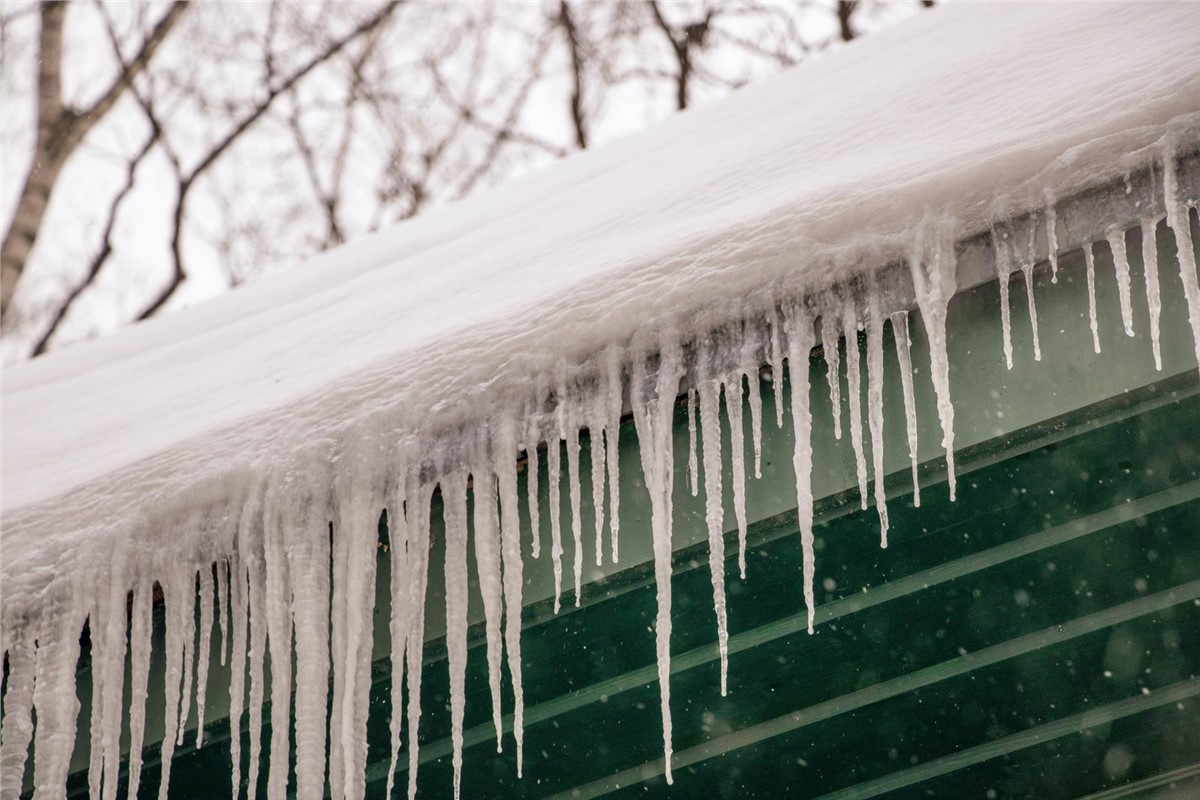
Up close at the eave: meltwater refreezing at the cold roof edge is what builds the dam, layer by layer.
Why Ice Dams Are Not a Gutter Problem
This surprises people, so it is worth saying plainly: your gutters did not cause your ice dam. Dams form on houses with no gutters at all, because the cause is heat loss at the roof, not water handling at the edge. Gutters can make the visible icicles bigger, and a gutter full of ice can be damaged by a dam — it can even be pulled off the house by the weight — but cleaning, replacing, or heating your gutters will not stop the melt-refreeze cycle on the roof above them.
Heat cables fall in the same category. They melt narrow channels through the ice so trapped water can escape, and for one stubborn valley or a north-facing eave they can be a reasonable band-aid. But they treat the symptom, run up an electric bill doing it, and leave the heat loss — the actual problem — untouched. Fix the attic and the roof system first; use cables only for the spots that still misbehave.
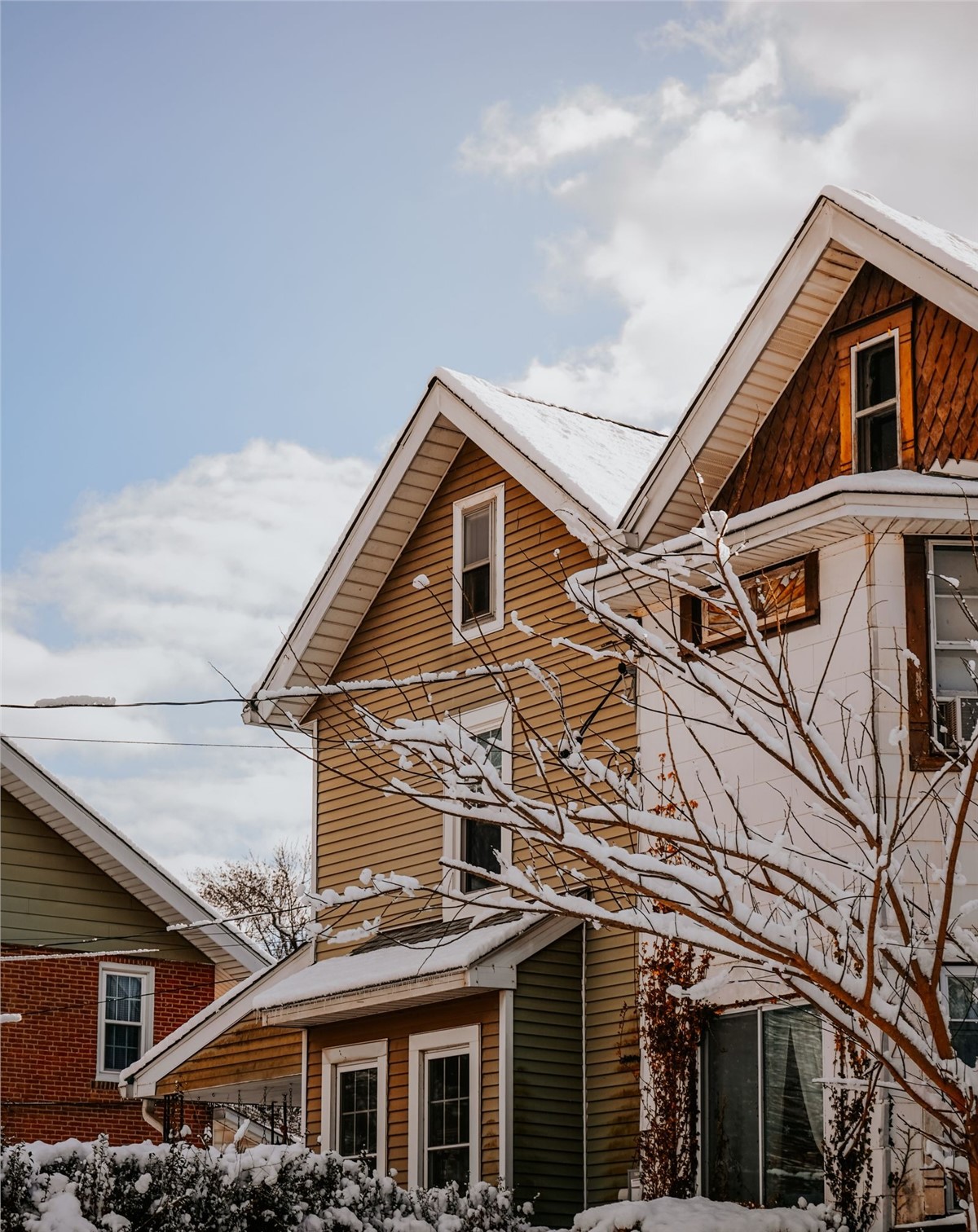
The goal looks like this: an even blanket of snow that stays put. Snow melting off in patches is heat escaping — snow that sits evenly is a cold, healthy roof.
Frequently Asked Questions
Are icicles always a sign of an ice dam?
No. A few small icicles during a cold snap are normal, especially on a sunny side of the house. Worry when icicles are long and thick, form a solid row along the eave, and keep growing — that pattern means a ridge of ice is building at the edge and meltwater is likely pooling behind it.
Can an ice dam really leak into my walls?
Yes, and it is the main damage dams do. Water pooled behind the dam backs up under the shingles and finds nail holes and seams, then runs into the attic and down inside wall cavities. The stain on your ceiling or wall can appear well inside the room, far from the eave where the water got in — which is why these leaks are so often misdiagnosed.
Will a new roof fix my ice dams?
Only if the job addresses the whole system. A replacement that includes ice-and-water shield at the eaves and valleys and a ventilation check — with blocked soffits opened up and ridge venting added where it is missing — removes the leak risk and part of the cause. Insulation and attic air sealing happen from inside the attic. An honest roofer will tell you which pieces your home needs instead of promising that new shingles alone will cure it.
Do heat cables work?
They work at what they do: melting drainage channels through the ice so backed-up water can escape. They do not stop dams from forming, because they do nothing about the heat escaping from your attic. For a single problem spot they can be a sensible stopgap; as a whole-house strategy, insulation and ventilation are cheaper and permanent.
How do professionals remove an ice dam?
With steam. A steamer melts the ice off the roof at low pressure without touching the shingles, which is the only removal method that does not risk damaging the roof. If a dam is actively leaking into your home, that is the call to make — not a ladder, a hammer, and a free afternoon.
The Bottom Line
Ice dams are not bad luck and they are not a gutter problem — they are a heat problem with a known fix: seal and insulate the attic, ventilate the roof properly, and make sure ice-and-water shield is in place at the eaves. If your roof is also near the end of its life, last week’s post on whether you should wait until spring to replace your roof walks through that decision. Either way, the time to find out where your home stands is now, before the deep freeze — not in February with water coming through the ceiling.
EAS Roofing is a family-run roofing company based in Glenshaw, serving the Pittsburgh area. We check attic ventilation on every free roof inspection, and we will tell you honestly whether your ice dam fix is a roof job, an attic job, or both.
Book your free roof inspection today: call 412-781-ROOF (412-781-7663) or request a quote at ThePittsburghRoofer.com.
Subscribe to EAS Roofing's Blog



Comments