How Freezing Weather Weakens Your Roof in Pittsburgh
Winter in Pittsburgh doesn’t just make driving harder — it quietly puts constant stress on your roof. Unlike storms that arrive and leave, freezing temperatures affect your roofing system every single day for months. Over time, this repeated exposure can weaken materials, create hidden damage, and shorten the lifespan of your roof.
Understanding how cold weather impacts your roof can help you prevent expensive repairs and protect your home long-term.
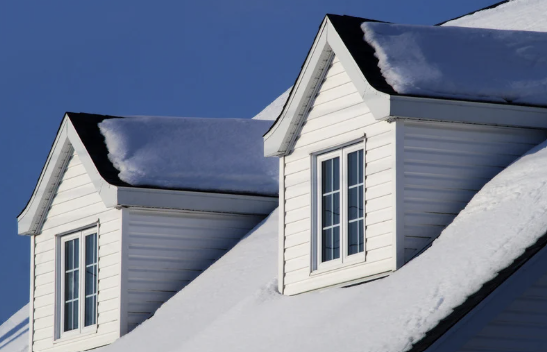
Temperature Fluctuations Cause Material Movement
Roofing materials expand when temperatures rise and contract when temperatures fall. During winter, Pittsburgh roofs can experience several temperature swings in a single day — especially on sunny but cold afternoons.
This constant expansion and contraction causes:
Shingles to loosen
Sealant to weaken
Nails to slowly back out
Flashing to separate from surfaces
Over time, these tiny movements create openings where water can enter.
Cold Makes Shingles Brittle
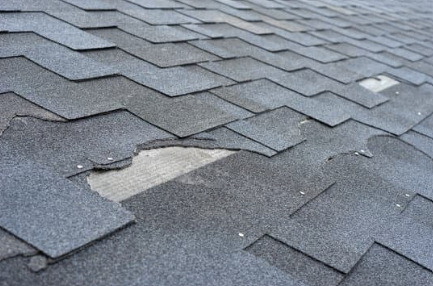
Asphalt shingles lose flexibility in freezing temperatures. When shingles become brittle:
They crack more easily
Corners lift and break
Wind damage becomes more likely
Granules shed faster
Once granules are lost, shingles absorb more moisture and deteriorate even faster.
Ice Dams Create Long-Term Damage
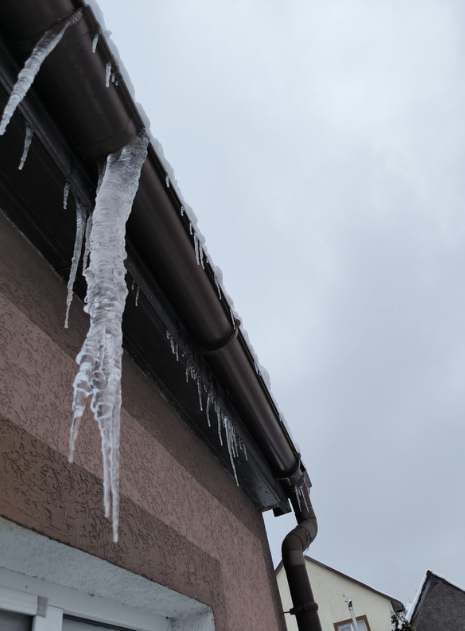
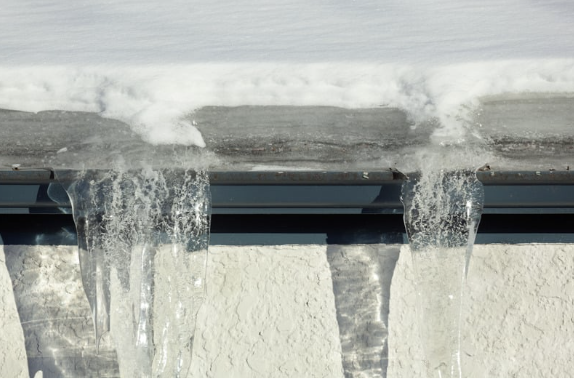
Ice dams form when snow melts and refreezes at roof edges. The trapped water has nowhere to go — so it works its way under shingles and into the roof system.
This can lead to:
Decking rot
Insulation saturation
Interior ceiling stains
Mold growth
Structural weakening
Ice dam damage often starts small and stays hidden until spring.
Flashing Is Especially Vulnerable
Flashing protects roof transitions around chimneys, vents, skylights, and valleys. Freezing temperatures cause metal flashing to shift and separate from sealant.
Even small gaps allow water to penetrate — and once water freezes inside those gaps, the openings grow larger.
Gutters Play a Bigger Role Than Homeowners Realize
Frozen gutters block drainage. When water can’t exit the roof properly:
It backs up under shingles
It freezes at roof edges
It increases ice dam risk
It stresses fascia and soffit
Proper gutter sizing and drainage design are critical in winter performance.
Why Winter Roof Damage Often Goes Unnoticed
Most homeowners don’t inspect their roofs in winter. Snow covers damage. Attic leaks may not show immediately. By the time water stains appear inside, damage has often been happening for months.
Why Winter Is the Best Time for a Roof Inspection
A winter inspection allows professionals to:
Identify brittle or lifted shingles
Check flashing separation
Evaluate ventilation performance
Inspect attic airflow and insulation
Spot early ice dam risk areas
Catching problems early can save thousands in repairs.
Final Thought
Freezing weather doesn’t just challenge your roof — it slowly weakens it. The best defense is awareness, inspection, and proactive maintenance.
If you’re unsure how winter has affected your roof, a professional inspection can give you peace of mind before small problems become major repairs.
Subscribe to EAS Roofing's Blog




Comments